Service, site investigation
Find out what the ground actually is.
Drilling, sampling, and in situ testing to replace assumptions about a site with measured soil and groundwater conditions.
What this is
The work, and what it answers
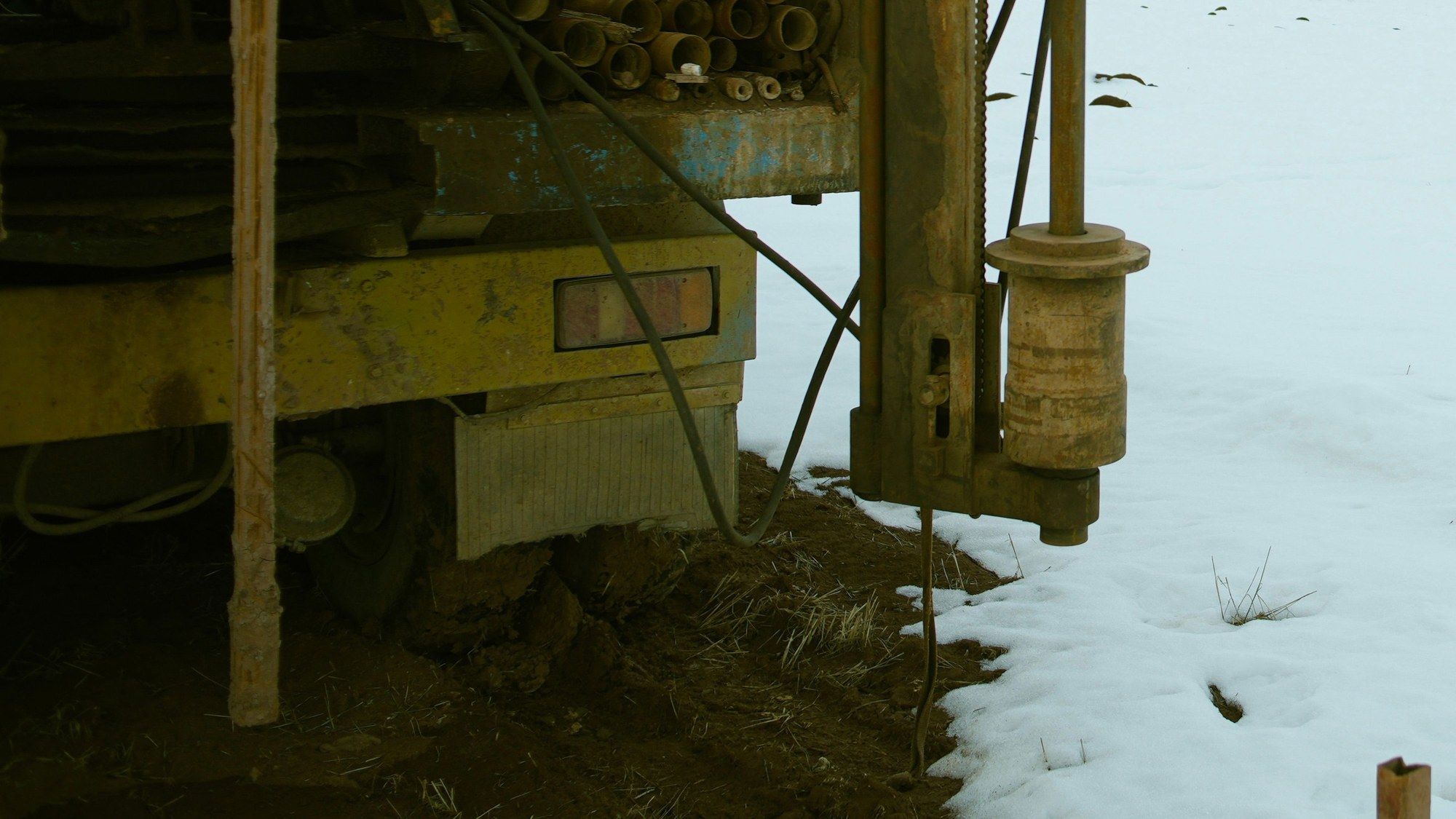
A site investigation is the fieldwork that a geotechnical report is built on. Boreholes are advanced at the right locations and depths for the structure being planned, soils are logged and sampled as the hole goes down, and groundwater is recorded where it is found.
The right number of holes, to the right depth, in the right places, is a judgement call that depends on the structure, the loads, and what the local geology is likely to hide. That judgement is made by the engineer who will also carry the design, not handed to a form.
Samples are taken for laboratory testing where the analysis calls for it: index tests to classify the soil, and strength or consolidation testing where bearing and settlement need to be quantified.
On the day it runs in a set order. Utility locates are cleared through Utility Safety Partners before anything is dug, access and any crop, fence or gate questions are sorted out with you, and then the rig moves in. Most sites in southern and central Alberta are drilled with a solid stem or continuous flight auger, with a split spoon driven at set intervals for an N value and a sample, and a test pit is opened instead where the question is shallow or a private sewage profile is needed. Groundwater is read in the hole and, where the season or the design calls for it, a standpipe is left in so the spring high can be caught rather than guessed at.
Samples go to an accredited laboratory for classification, moisture and, where bearing or settlement governs, strength or consolidation testing. The logs, the test results and the interpretation then go into the geotechnical report, sealed by Andrew Richardson, P.Eng. How the drilling, sampling and testing choices are made is set out on the field methods page, and what the finished document contains is on the geotechnical reports page.
If the site does not need an investigation at all, or needs a smaller one than you were told, you will hear that first. Describe what you are building and where, and you get a reply, usually within one business day, setting out what the investigation would cover. Scope, schedule and fee are set out in a written proposal before anything starts.
When you need it
The situations this answers
- Before designing foundations for a new building, addition, or structure.
- When a municipality or reviewer asks for a geotechnical report to support a permit.
- When a site has fill, soft ground, high groundwater, or a history that raises questions.
- Before earthworks, retaining structures, or anything that changes how the ground carries load.
Sampled and logged on site
Borehole log (illustrative)
Need the ground looked at before you build?
Describe what you are building and where. You get a reply, usually within one business day, setting out what the investigation would cover.
Sealed by Andrew Richardson, P.Eng. Serving southern and central Alberta